Have a tattoo idea?
Send your idea and reference photos on WhatsApp. We will reply with style advice, pricing, and available booking times.
Yes, it can be safe to get a tattoo in Bali—but safety depends on the studio, artist, equipment, and aftercare. Bali has professional studios that follow careful hygiene practices, and it also has operators where standards may be unclear. Do not assume that a polished social feed or a busy location proves safe procedure.
The honest answer: choose a studio that uses sealed single-use needles, fresh ink caps, clean gloves, protected work surfaces, proper sharps disposal, and clear aftercare. Ask questions before paying a deposit or sitting in the chair.
This article provides general safety information, not personal medical advice. If you have a health condition, take medication, or are concerned about infection or allergy, consult a qualified healthcare professional.
Why Tattoo Safety Matters
Tattooing repeatedly breaks the skin. Poor practice can increase the risk of local infection, allergic reaction, contaminated ink exposure, scarring, and transmission of bloodborne infections. These risks are not unique to Bali; they can exist anywhere hygiene and infection-control practices are inadequate.
The US Food and Drug Administration's tattoo safety guidance explains that infections can be linked to unsterile practices or contaminated inks and that reactions may occur immediately or later.
A Safe Tattoo Studio Checklist
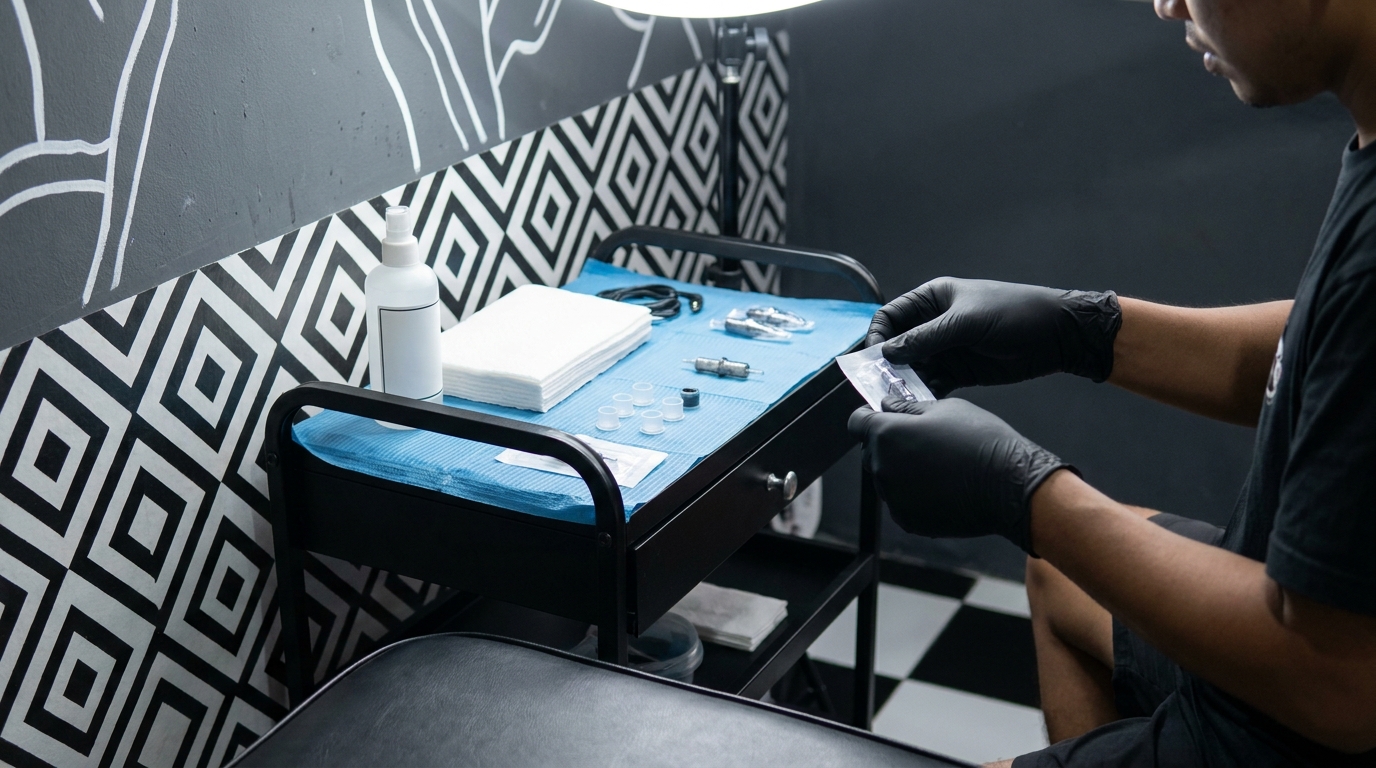
- Needles or cartridges are single-use, sealed, and opened for each client.
- Fresh ink is poured into disposable caps for the session.
- The artist washes their hands and changes gloves when contamination may have occurred.
- The tattoo bed and touched equipment are covered or disinfected between clients.
- Used needles go directly into a sharps container.
- The working area is separate from food, smoking, pets, and unrelated personal items.
- The studio provides clear aftercare and a way to ask follow-up questions.
Use this list together with our guide to choosing the best tattoo studio in Bali.
What Single-Use Really Means
A single-use needle or cartridge should come from intact packaging and be discarded after your session. Ink caps should also be new for each client. Products should not be returned to a shared container after they have entered the working area.
If reusable grips or equipment are part of the artist's setup, ask how they are cleaned and sterilised. The team should be able to explain the process without avoiding the question.
Gloves Are Important, but Technique Matters
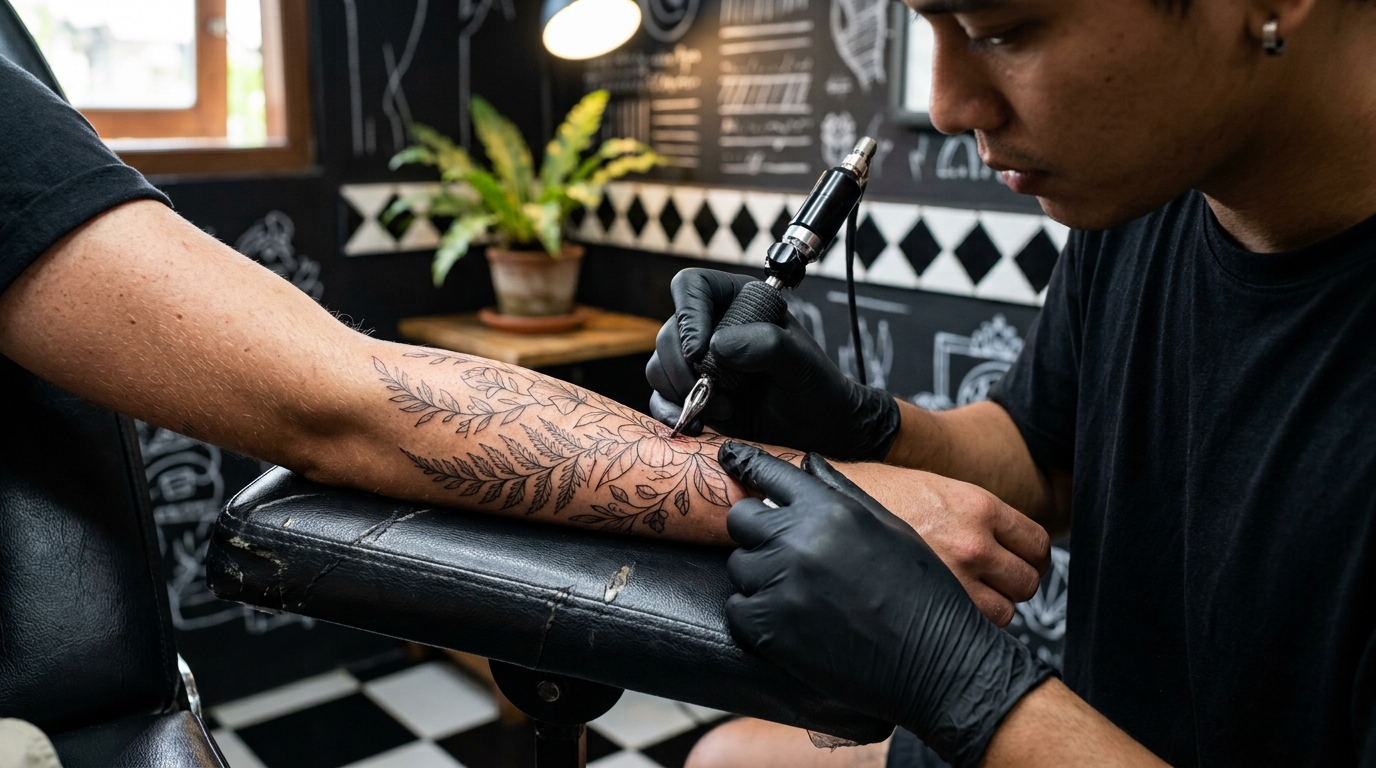
Gloves only help when they are used correctly. An artist should change gloves after touching a phone, door handle, face, unprotected bottle, or another contaminated surface before returning to the tattoo.
Look for protected machine cables, spray bottles, lights, and other objects used during the session. Infection control is a complete workflow, not simply wearing black gloves.
Check the Ink and Work Area
Ink should be prepared in fresh disposable caps. The workstation should be clean and organised before you sit down. Ask which products will be used if you have known allergies or sensitive skin.
Do not proceed if you see used supplies left on the station, needles without clear packaging, overflowing waste, or food and drinks beside the tattoo setup.
Review the Artist's Real Portfolio
Safety and artistic quality are separate checks; you need both. Review consistent work by the artist who will tattoo you. Look for clean lines, smooth shading, appropriate saturation, and healed examples. Make sure the artist regularly works in the style and scale you want.
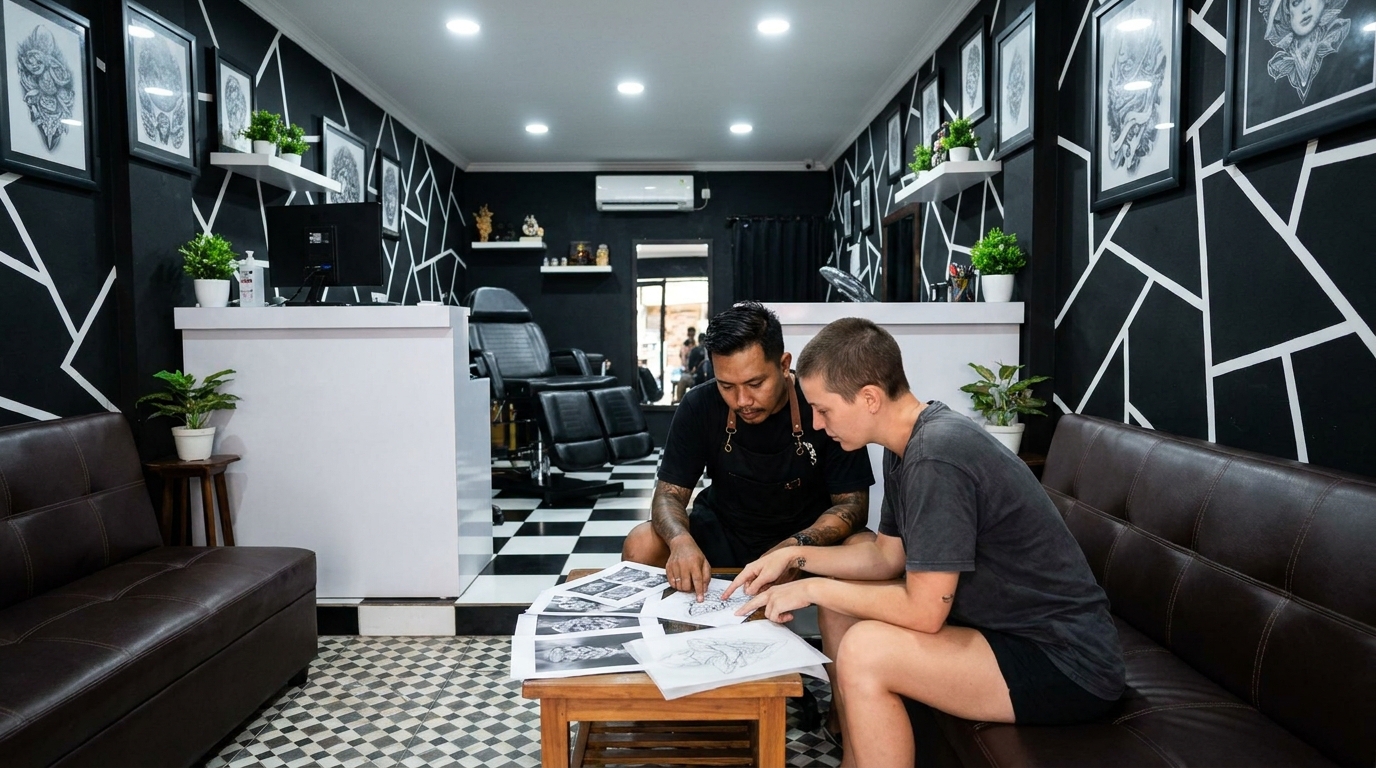
Browse our real tattoo portfolio and ask the studio which artist is best matched to your idea.
Questions to Ask Before Booking
- Do you use sealed single-use needles or cartridges?
- How are work surfaces and reusable equipment prepared between clients?
- Can I see healed work from the artist?
- What aftercare instructions will I receive?
- Who should I contact if I have a healing concern?
- How should I plan swimming, sun, exercise, and travel after the session?
A professional studio should answer clearly. Vague reassurance such as “everything is safe” is less useful than a direct explanation of the process.
When You Should Postpone
Do not get tattooed when you are intoxicated, severely sunburned, or acutely unwell. If you have an active skin problem at the placement, a condition that affects healing or immunity, a history of serious allergic reactions, or concerns about medication, ask a healthcare professional before booking.
Do not stop prescription medication without medical advice. A responsible tattoo artist should not diagnose a condition or override your clinician.
Safety Continues After the Appointment
Even a well-applied tattoo needs careful aftercare. Wash your hands before touching it, follow the studio's dressing instructions, avoid soaking, reduce friction, and keep the tattoo out of direct sun while it heals.
In Bali, plan around pools, beaches, surfing, scooter travel, heat, and humidity. Read our tattoo aftercare guide and Bali tattoo preparation guide before choosing the appointment day.
Know When to Seek Medical Advice
Some tenderness and mild redness can occur early. Seek medical care if redness spreads, pain or swelling becomes worse, the area feels increasingly hot, pus appears, red streaks develop, or you have fever or feel unwell. Contact emergency services for symptoms of a severe allergic reaction, such as difficulty breathing.
Do not ask a tattoo studio to diagnose a medical problem. The studio can explain its process and aftercare, but clinical symptoms need a qualified healthcare professional.
Our Approach at Bali Family Tattoo Studio
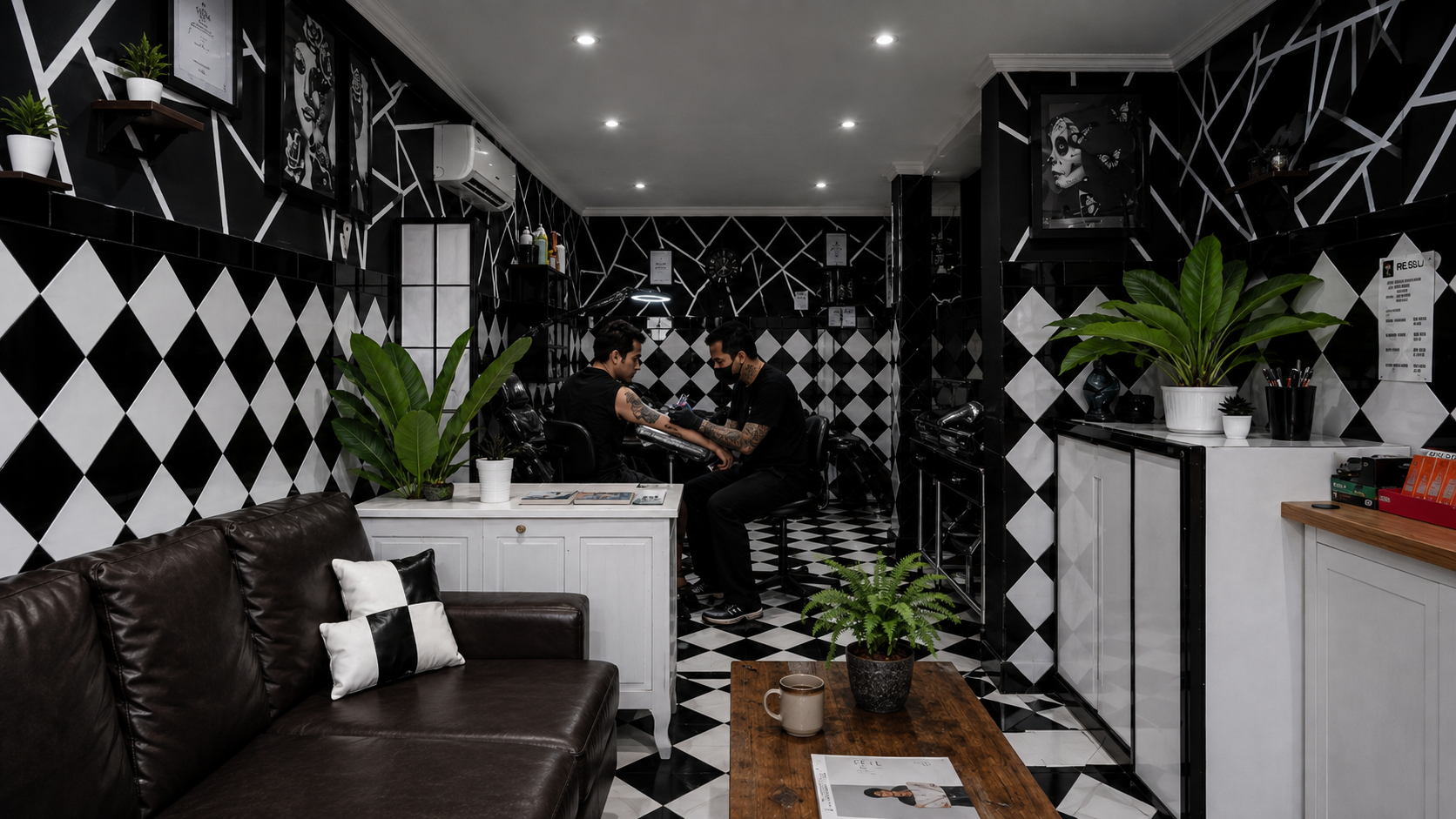
We use single-use sterile needles and fresh supplies for each session, maintain an organised working area, and explain aftercare before clients leave. We welcome practical questions about the setup and can discuss how to plan a tattoo around your Bali itinerary.
We also match each request to an artist based on style and scope, because safe procedure and strong artwork should be considered together.
Frequently Asked Questions
Is it safe for international tourists to get a tattoo in Bali?
It can be safe when you choose a professional studio, verify hygiene practices, review the artist's work, disclose relevant health concerns, and follow aftercare during the rest of your trip.
How can I tell whether a needle is new?
It should come from sealed packaging and be opened for your session. You can ask the artist to explain the cartridge or needle setup before tattooing begins.
Are cheap tattoos in Bali unsafe?
Price alone does not prove whether a studio is safe. However, an unusually low quote should not persuade you to ignore hygiene, portfolio quality, communication, or aftercare.
Can I get a tattoo if I have sensitive skin?
Sensitive skin has many causes. Discuss known allergies with the studio and consult a qualified healthcare professional if you have eczema, active irritation, a history of severe reactions, or another concern.
What should I do if my tattoo looks infected?
Seek medical advice promptly, especially if symptoms are worsening or you have spreading redness, increasing pain, pus, red streaks, or fever. Do not rely only on online advice.
Ask Us About Safety Before You Book
Send your design idea, placement, size, and travel dates to Bali Family Tattoo. We will explain the consultation, artist match, studio process, quote, and aftercare before your appointment. Contact Bali Family Tattoo Studio or review our tattoo FAQ.
Want a quote?
Send your idea on WhatsApp. We will give you a price estimate before you book.
Send to WhatsApp