Have a tattoo idea?
Send your idea and reference photos on WhatsApp. We will reply with style advice, pricing, and available booking times.
Getting the tattoo done well is only half of the process. How you care for the skin during the following days and weeks affects comfort, healing, and how clearly the tattoo settles.
The short answer: follow the instructions given by your artist, wash with clean hands and mild fragrance-free soap, apply only a thin layer of the recommended moisturiser, avoid soaking and direct sun, and never pick peeling skin. Ask a healthcare professional for help if symptoms become worse rather than gradually better.
This guide provides general information and does not replace personalised advice from your tattoo artist or a qualified healthcare professional.
Before You Leave the Studio
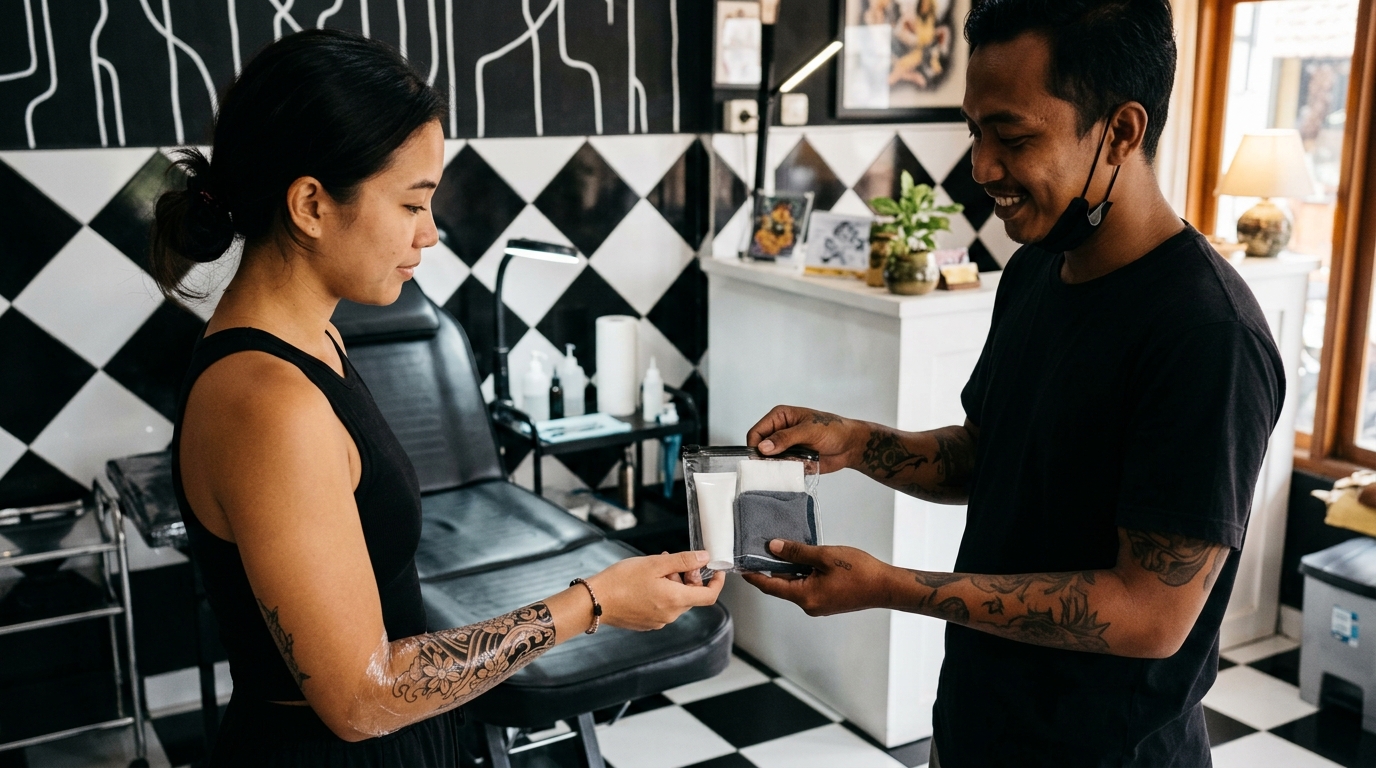
Your artist will clean and cover the tattoo after the session. The dressing may be a traditional wrap or a medical-style adhesive film. These products have different removal instructions, so follow the timeline provided for your specific dressing rather than copying another person's routine.
Before leaving, confirm:
- When and how to remove or replace the dressing.
- How often to wash the tattoo.
- Which moisturiser or aftercare product to use.
- What activities to avoid.
- How to contact the studio if you have a question.
Days 1–3: The Fresh Tattoo Stage
When it is time to remove the initial covering, wash your hands first. Gently clean the tattoo with lukewarm water and a mild fragrance-free soap. Do not scrub it with a cloth or sponge. Rinse carefully, then pat it dry with a clean disposable paper towel or allow it to air-dry in a clean environment.
Apply a very thin layer of the product recommended by your artist. More product is not better. A heavy layer can trap moisture and make the area unnecessarily sticky.
Mild warmth, tenderness, or a small amount of clear fluid can occur early in healing. The overall trend should be toward improvement. If pain, swelling, heat, or redness is increasing, ask for professional medical advice.
Sleeping with a new tattoo
Use clean bedding and wear loose, breathable clothing if it helps prevent rubbing. Avoid sleeping directly on the tattoo when practical. If fabric sticks to the area, do not pull it away dry; gently loosen it with clean lukewarm water.
Days 4–14: Peeling and Itching
The tattoo may begin to peel or flake like dry, sun-exposed skin. This is a normal part of many healing experiences. Do not pick, scratch, or pull at loose skin. Let it separate naturally.
Continue gentle washing and light moisturising. If itching becomes uncomfortable, use a cool clean compress around the area and ask your artist for guidance. Do not apply unfamiliar home remedies, strongly fragranced products, or thick petroleum-based products unless a qualified professional specifically recommends them for your situation.
Weeks 3–6: The Tattoo Settles
The surface may look healed before the deeper skin has fully settled. The tattoo can temporarily appear dull or slightly cloudy. Continue treating the area gently and avoid judging whether it needs a touch-up until the artist's recommended healing period has passed.
Once the skin is fully healed, moisturising and sun protection become part of long-term care. The American Academy of Dermatology recommends protecting tattooed skin from ultraviolet exposure to reduce fading and skin damage.
Healing a Tattoo in Bali's Climate
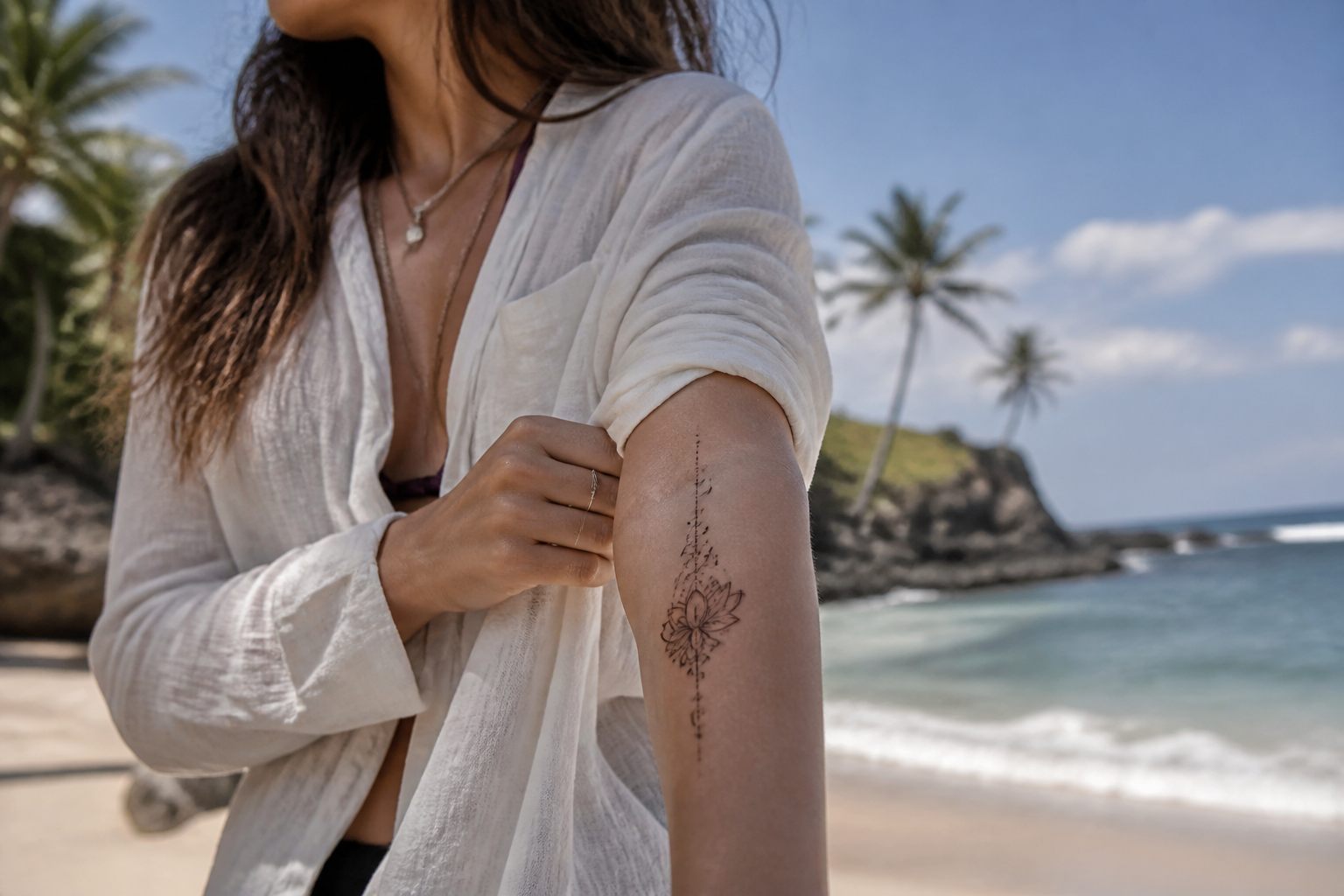
Bali's heat, humidity, beaches, pools, and outdoor activities can make aftercare more demanding. Plan ahead rather than trying to protect a fresh tattoo during a full day of swimming or sightseeing.
Swimming and soaking
Do not submerge a healing tattoo in the ocean, a swimming pool, a bath, or a hot tub. Water exposure, chemicals, and microorganisms can irritate healing skin. Wait until the surface has healed and follow the timeline given by your artist.
Sun and heat
Keep a fresh tattoo out of direct sunlight. Use shade and loose clean clothing rather than applying sunscreen to skin that has not healed. Once healed, use broad-spectrum sun protection according to the product directions.
Sand, scooters, and shared surfaces
Protect the tattoo from sand, dust, dirty equipment, and friction. If you travel by scooter, choose loose clothing that covers the area without rubbing. Avoid pressing a fresh tattoo against shared gym equipment, pool loungers, or other high-contact surfaces.
Can You Exercise After a Tattoo?
Exercise can create sweat, stretching, rubbing, and contact with shared equipment. The right pause depends on the tattoo's size, placement, and your activity. Ask your artist for advice based on the session. When you return, keep the area clean and avoid movements or clothing that repeatedly pull across it.
What to Avoid While the Tattoo Heals
- Swimming or soaking the tattoo.
- Direct sun exposure.
- Picking, scratching, or shaving over peeling skin.
- Tight or dirty clothing over the area.
- Strongly fragranced lotions and unapproved home remedies.
- Heavy friction, excessive sweating, and shared surfaces early in healing.
- Letting pets lick or rub against the tattoo.
Know the Warning Signs
A healing tattoo can be tender and mildly red at first. Seek medical advice promptly if you develop redness that spreads, worsening pain, increasing swelling or heat, pus, red streaks, fever, or other symptoms that concern you. Do not rely on social media photographs to diagnose an infection or allergic reaction.
The US Food and Drug Administration provides additional general information about tattoo risks and when problems can occur.
Long-Term Tattoo Care
Once fully healed, protect the tattoo from repeated UV exposure, keep the skin moisturised, and avoid intentional tanning. Colour and fine details naturally change over time, but consistent sun protection can help preserve contrast.
If you think a touch-up may be needed, send the artist a clear photograph after the tattoo has fully healed. Touching the skin too early can interrupt recovery.
Frequently Asked Questions
How often should I wash a new tattoo?
Follow your artist's instructions for your dressing and tattoo. The usual goal is gentle cleaning without excessive washing, scrubbing, or soaking.
How much moisturiser should I use?
Use a thin layer of the product recommended by your artist. The skin should not be covered by a heavy, greasy coating.
Is peeling normal?
Light flaking or peeling is common. Do not pick it. Contact the studio or a healthcare professional if the area becomes increasingly painful, swollen, hot, or produces pus.
When can I swim after a tattoo?
Wait until the tattoo has healed and follow your artist's advice. Healing time varies, so a fixed date cannot be guaranteed for every person and tattoo.
Can I put sunscreen on a fresh tattoo?
Keep fresh tattooed skin out of direct sun. Apply sunscreen only after the skin has healed, unless a qualified healthcare professional advises otherwise.
Need Aftercare Help?
Every Bali Family Tattoo client receives aftercare guidance for their session. If you are planning a tattoo during your holiday, read what to know before getting tattooed in Bali and our guide to tattoo safety in Bali, then contact our studio with your idea and travel dates.
Want a quote?
Send your idea on WhatsApp. We will give you a price estimate before you book.
Send to WhatsAppView Services
Compare small, medium, sleeve, back, and leg tattoo pricing.
View Real Portfolio
Send a gallery photo as a reference on WhatsApp.
Read FAQ
Safety, booking, aftercare, deposit, and beach timing.
Contact Studio
WhatsApp or the booking form on our contact page.